

SUPPORT GROUPS
In my practice at Intentional Family Therapy, I offer a range of group sessions tailored to meet different needs. While I understand some clients may hesitate about group settings, preferring one-on-one interactions due to privacy concerns, I want to assure you that the benefits of group experiences are profound and uniquely found in this setting.
Group sessions allow participants to hear others express similar thoughts and struggles, creating a powerful sense of belonging, validation, and stigma removal. What might seem like a less personalized setting actually provides unique insights and perspectives, challenging long-held beliefs and perceptions. Participants also learn tools and strategies on how to manage their own thoughts and feelings.
The dynamic in groups is something individual sessions can't replicate. It's about everyone coming together, each with their own needs and perspectives, united by a common goal: to address and confront the pain or struggle they are experiencing that brought them to seek help. Whether as a complement to individual therapy or as a stepping stone for those transitioning from therapy, group sessions in my practice offer a supportive and transformative space for healing and growth.
BENEFITS OF SUPPORT GROUPS
-
Insight and Awareness of narrative and how that is contributing to feeling stuck in a repetitive cycle.
-
Building tools and strategies on how to set healthy boundaries and communicate openly with others.
-
Learning tools and strategies on how to regulate your own emotions and reactions.
-
Learning tools on how to sit with emotions and navigate through them vs avoiding and or pushing them away. Working towards acceptance of emotional discomfort.
-
Gaining different viewpoints and understanding one's own internal reactions.
-
Building awareness of and challenging internal negative beliefs.
-
Cultivating the skill of self-validation, vs external validation.
Participating in a group setting encourages a level of vulnerability that is different from individual sessions. It provides a space for individuals to reflect on themselves, assess their relational needs, and collaborate with others to confront fears and counterproductive beliefs. This environment is crucial for personal growth and developing healthier interpersonal dynamics. It creates the opportunity to learn effective tools and have a safe space to practice these skills.
THINGS TO CONSIDER IN GROUP SETTINGS:
Before joining our group sessions at Intentional Family Therapy, here are some steps you might consider to prepare:
-
Increase your awareness of personal triggers and early warning signs.
-
Discuss a support plan with your individual therapist and determine if a group setting is a good fit.
-
Let the group facilitator know about your experience in individual therapy.
Embrace any discomfort, fear, or uncertainty about joining a group – it's completely normal and expected! Being nervous is a part of challenging yourself to grow, learn new tools, and share your feelings with others who have similar experiences. Remember, feeling uncomfortable is a very human response to new challenges

GIRLS TEEN GROUP
8 week program for teens 15-17
-
Unlocking Your Inner Creativity
-
Overcoming Self-Doubt and Limiting Beliefs
-
The Power of Being Present
-
Making Intuitive Choices with Confidence
-
Shaping Your Personal Path
-
Managing Time, Stress, and Procrastination
-
Strengthening Relationships and Effective Communication
-
Striking a Balance Between Life, School and Fun
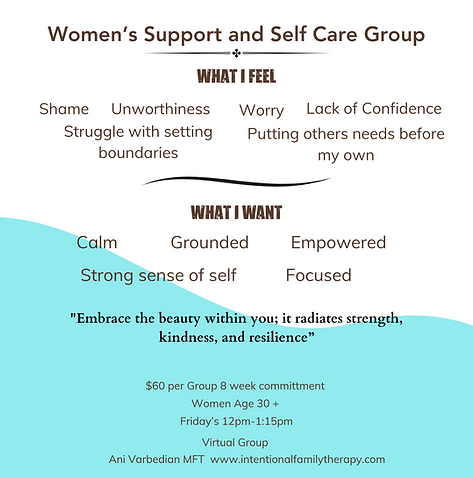
WOMEN'S SUPPORT AND SELF-CARE GROUP
This is a support group tailored for women aged 30 and above who encounter challenges in setting healthy boundaries, and grapple with issues related to self-esteem that show up in people pleasing, putting others needs before their own and contributes to feelings of overwhelm, shame, unworthiness, and loss of self. Members will acquire understanding about how childhood wounds and relational trauma may contribute to apprehension in expressing their needs in adult relationships. Joining this group provides an opportunity to grasp techniques for cultivating healthy boundaries while addressing and challenging detrimental self-perceptions and narrative that keeps them stuck in repetitive patterns. You will also learn concrete tools and strategies on self- care.